
Sēkr: Vanlife, Roadtrip, Camp
Sēkr, Inc.Travel & Local
3.9204.00 Reviews
- Version
- 4.11
- Installs
- 10.00K
- Age Rating
- Teen
Screenshots

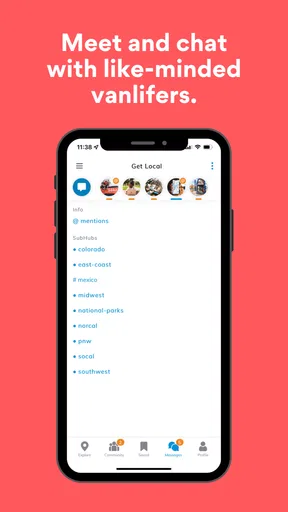
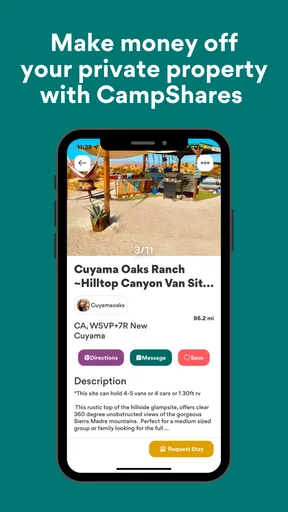
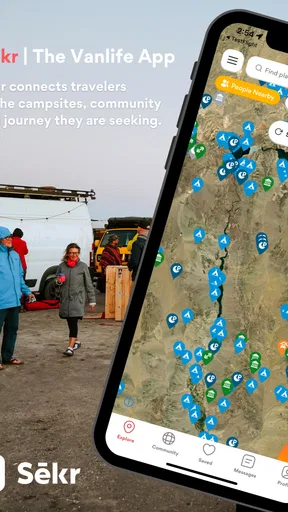
Our Review of Sēkr: Vanlife, Roadtrip, Camp
 Analysis by Appyee
I approached Sēkr: Vanlife, Roadtrip, Camp as a practical travel companion rather than another glossy trip-planning tool. Its focus is clear: helping people who travel by van, RV, or car think through where to go, where to stop, and how to organize a road-based adventure. In my experience, that makes it more interesting than a standard map app when the journey itself matters as much as the destination.
The app sits in the Travel & Local category and is developed by Sēkr, Inc. It is free to install, carries a Teen content rating, and has reached over ten thousand installs. Its average rating is 3.9 from hundreds of ratings, which suggests a useful but not universally smooth experience. I think that is a fair starting point: Sēkr can be genuinely helpful for the right traveler, but it is not a complete replacement for navigation, campground booking, or careful trip research.
How Sēkr feels in current everyday use
The strongest part of the app is its travel mindset. Instead of treating a road trip as a simple line between two cities, it encourages me to think about the stops, the overnight rhythm, and the practical decisions between major destinations. That is especially valuable for vanlife and RV travel, where a beautiful route can become frustrating if the vehicle is unsuitable for a road, a stop is too crowded, or the next useful facility is much farther away than expected.
I found the concept most appealing when planning a flexible trip rather than a tightly scheduled holiday. A hotel-based itinerary usually begins with fixed reservations. A van trip often begins with a direction, a rough number of days, and a willingness to change plans. Sēkr fits that second style better. It gives the planning process a more exploratory feel, helping me consider possible stops before I commit to a final route.
That flexibility is also the reason I would not use it alone. A roadtrip planner can help me discover and arrange ideas, but it should not be treated as the final authority for road conditions, local restrictions, weather, or whether a particular place is actually suitable for my vehicle. I would still verify important details through official sources and a dedicated navigation app before driving there.
For a first-time van traveler, this distinction matters. The app can help turn a vague idea such as “drive along the coast and camp for several nights” into a more structured plan. It cannot remove the responsibility of checking the details that affect safety, legality, and comfort. I see it as a planning layer that works alongside other tools, not as a single dashboard for every part of mobile travel.
A realistic weekend workflow
Imagine I have a long weekend, a compact camper, and no interest in booking a conventional hotel. I might begin by choosing a broad region, marking places that look suitable for an overnight stop, and arranging them in a logical order. Then I would compare the route with my fuel range, driving tolerance, and preferred arrival times. Sēkr is useful in that early stage because it helps me think in terms of a complete road experience rather than one isolated destination.
Before leaving, I would use the plan as a checklist rather than a promise. I would confirm opening information, access rules, weather, and the condition of the roads. I would also keep an alternative stop available for each night. This is one of the most practical ways to use the app: let it expand the possibilities, then reduce those possibilities to a realistic primary plan and a backup plan.
That backup habit is particularly important for RV users. A location that looks appealing on a phone may be inconvenient because of vehicle length, turning space, steep access, or limited services. The app can support discovery, but the driver still needs to judge whether the stop matches the vehicle and the people traveling in it.
Why the audience is narrower than a normal travel app
Sēkr makes more sense for people who enjoy self-directed travel. Van owners, RV travelers, campers, and roadtrippers who prefer changing plans as they go will probably understand its appeal quickly. It is also useful for someone preparing a first longer road journey and trying to learn how to connect destinations with sensible overnight stops.
I would be less enthusiastic about it for a city break built around museums, restaurants, and public transport. A conventional itinerary app or map service may be faster when the main task is finding a hotel near a train station. Likewise, a traveler who already has every campsite reserved may gain less from an exploratory planning tool.
The app is also not the best fit for someone who wants a completely automatic itinerary. Its value comes from making choices, comparing possibilities, and adapting the plan. If I want software to decide every stop without my input, I would probably find the process slower than expected.
What the current version tells me about its direction
The current release is version 4.11, while the app first appeared in March 2019. That history matters because Sēkr is not a brand-new experiment. It has had time to develop around the needs of road travelers, and the version number indicates an established product rather than a first draft. At the same time, I would judge it by what it does today, not by assumptions about features that may have existed in earlier releases or might arrive later.
For existing users, a mature version can be reassuring. An app that has been maintained over several years is more likely to reflect real travel habits than a product designed only around promotional screenshots. It also means returning users may already have a familiar planning routine and may prefer gradual improvements over a complete redesign.
New users should still spend time learning the app before relying on it for an important trip. Version maturity does not automatically mean that every screen will be obvious. I recommend creating a small test plan first: choose a short route, explore the available planning options, and see how comfortably the information can be reviewed while preparing at home. That is much better than discovering the workflow for the first time at a roadside stop.
The evolution from its original release to the current version is best understood as ongoing refinement of a specialized travel tool. I would not interpret the version number as proof that it replaces all other travel services. Instead, it suggests that the developer, Sēkr, Inc., has continued shaping the app around a particular community: people who sleep, explore, and move around in their vehicles.
How updates affect someone who already uses it
If I were already using Sēkr, I would pay attention to whether the current version makes my existing planning habits faster or clearer. The most meaningful improvement for a regular user is not necessarily a dramatic new feature. It may be easier organization, less friction when revisiting a route, or a smoother way to move from inspiration to a usable plan.
Returning travelers should review saved plans after updating rather than assuming that everything behaves exactly as before. I would check that important destinations remain easy to find, that my preferred route is still understandable, and that I can quickly locate the information I need before departure. This is a sensible habit with any travel app, especially when the plan involves several stops and limited connectivity.
There is also a practical trade-off between convenience and dependence. The more I use one app to organize a journey, the more important it becomes to keep essential details available elsewhere. I would save critical addresses and confirmations separately, carry offline navigation, and avoid treating a phone screen as my only record of the trip. Sēkr can organize the journey, but good preparation should survive a dead battery or a weak signal.
Three planning habits that make it more useful
My first recommendation is to plan by travel days, not just by attractions. For each day, I would consider the distance, likely arrival time, food and fuel needs, and the type of overnight stop I want. This prevents the common mistake of filling a route with interesting places while forgetting that a large vehicle takes time to maneuver, park, and settle for the night.
Second, I would separate “interesting” from “practical.” A scenic location may be perfect for a daytime visit but unsuitable for sleeping. Keeping those roles distinct helps avoid building an itinerary around places that look good on a map but do not meet the needs of an overnight stop. This is a small change in workflow, but it makes the resulting plan much more realistic.
Third, I would create a deliberate fallback for each important night. Instead of searching from scratch after a long drive, I would identify an alternative area or stop before leaving. The benefit is not only convenience. It gives me permission to change the plan when weather, fatigue, road conditions, or crowding make the original choice unattractive.
These habits are where the app becomes more than a list of places. Its real usefulness comes from how I use the planning information. A casual search may produce ideas; a structured route with backups produces a trip I can actually manage.
Where the experience still has limits
The first limitation is scope. Sēkr is centered on van, RV, and roadtrip planning, so it should not be judged as a universal travel organizer. If my trip depends on flights, rail connections, hotel loyalty programs, or detailed restaurant reservations, I would need other tools. The app’s specialization is an advantage for vehicle-based travel, but it naturally leaves other travel styles outside its main purpose.
The second limitation is the gap between discovering a place and confirming it. Travel information changes quickly. Access rules, seasonal availability, local restrictions, and road conditions can affect whether a stop works in practice. I would never assume that an appealing result is automatically available or appropriate for overnight use. The app helps me decide what to investigate; it does not eliminate that investigation.
The third issue is that flexible planning can become overwhelming. More possibilities are not always better, especially when I am tired or working with a short schedule. I get the best results when I limit the plan to a manageable number of serious options. Otherwise, browsing can replace decision-making, leaving me with a collection of pins but no clear route.
There is also a financial detail worth understanding. The app is free, but it includes optional purchases priced from $1.99 to $41.99 per item. That does not make the free starting point unattractive, but I would check what each purchase provides before paying. A traveler who only needs occasional inspiration may be satisfied without spending more, while someone planning frequent trips may see value in additional capabilities. The important point is to evaluate those purchases against actual travel habits rather than assuming every optional item is necessary.
The Teen content rating is another reminder that the app is intended for a broad travel audience but is not necessarily designed as a children’s travel experience. Families can still use it for planning, but I would expect an adult to handle decisions about overnight locations, driving distances, and local rules.
When another option is better
If I need turn-by-turn directions, I would choose a dedicated navigation service. Navigation requires a different kind of reliability and attention than trip discovery. I would use Sēkr to shape the journey, then use navigation software for the actual drive, checking the route against vehicle restrictions and current conditions.
If I need guaranteed accommodation, I would look at a booking-focused service or contact the campground directly. A planning app is useful for identifying possibilities, but a reservation system is the better tool when I cannot afford to arrive without a confirmed place to stay.
If I am traveling internationally and need detailed information about border crossings, permits, insurance, or local regulations, I would add official government and regional sources. Those details are too important to leave to a general roadtrip workflow. Sēkr can remain part of the preparation, but it should not be the only source I consult.
Finally, if I dislike making choices and want a rigid schedule, a traditional package itinerary may suit me better. Sēkr rewards curiosity and adjustment. That is exactly what I like about it, but it may feel like unnecessary work to someone who wants every hour settled in advance.
What I would watch before committing to it
For new users, I would watch how well the app fits the way I actually travel. Do I enjoy building a route from several possible stops, or do I already know where I am going? Do I need inspiration, organization, or confirmed reservations? Answering those questions will tell me more than the install price. The free entry point makes trying it low-risk, but the real test is whether it improves my preparation rather than adding another screen to manage.
I would also watch the balance between exploration and verification. The best version of my workflow uses Sēkr early, when I am comparing regions and shaping a route, then switches to authoritative sources for final checks. If I use it at the right stage, it can save time and spark ideas. If I expect it to provide every operational detail, disappointment is more likely.
Regular users should watch how the app continues to evolve around real vanlife needs. Useful progress would mean clearer planning, dependable organization, and less effort when revisiting a route. I would value improvements that reduce the number of steps between finding a worthwhile stop and understanding how it fits into the day. I would be less interested in additions that create more browsing without making decisions easier.
My final recommendation is straightforward. I would suggest Sēkr to a van, RV, or roadtrip traveler who wants help turning a loose idea into a flexible route. I would not recommend relying on it as the only navigation, booking, or safety resource. Used alongside those services, it has a clear role and a friendly travel philosophy. Used by itself, it asks too much of one app.
Overall, this is a specialized free travel app with a useful point of view. Its 3.9 average reflects a product that can work well while still leaving room for friction and personal preference. I like it most as a place to begin: a way to imagine the route, compare stops, and prepare a backup before the road makes the decisions for me. For travelers who value that kind of freedom, Sēkr is worth trying before the next vehicle-based adventure.
Verdict
Strengths of Sēkr: Vanlife, Roadtrip, Camp
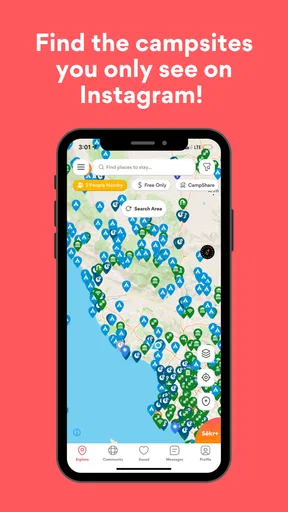
- Large database of campsites, parking spots, and outdoor locations
- Useful filters help find places suited to your vehicle and travel style
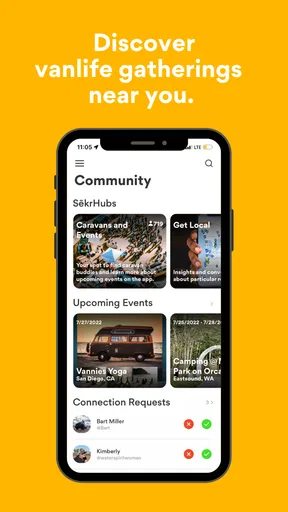
- Community reviews and updates can reveal current site conditions
- Trip planning tools make it easier to organize multi-stop adventures
- Supports discovering lesser-known destinations beyond standard campgrounds
Limitations of Sēkr: Vanlife, Roadtrip, Camp
- Some location details may be incomplete or outdated
- The best features and information may require a paid membership
- Coverage and community activity vary considerably by region
- User-submitted listings can differ in accuracy and reliability
- Finding legal overnight parking still requires checking local regulations
Similar Picks in This Category
View All
Google Maps
Google LLC3.4

Google Maps Go
Google LLC4.1

Booking.com: Hotels & Travel
Booking.com Hotels & Vacation Rentals4.8

Google Earth
Google LLC3.8

Skyscanner Flights Hotels Cars
Skyscanner Ltd4.8

trivago: Compare hotel prices
trivago N.V.4.4
Frequently Asked Questions
What is Sēkr: Vanlife, Roadtrip, Camp, and who is it for?
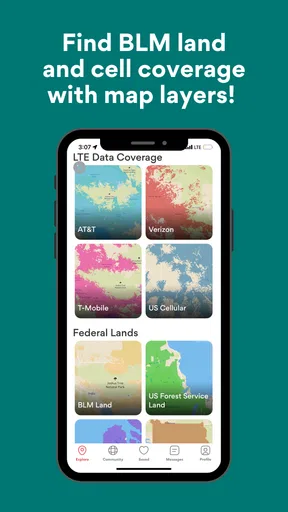
Sēkr is a travel and camping companion designed for vanlifers, road trippers, campers, and anyone planning outdoor adventures. It helps users discover campsites, overnight parking areas, public lands, amenities, and useful travel information. The app is particularly helpful for people traveling by campervan or motorhome, although tent campers and general road trippers may also find its location-based resources useful.
Can Sēkr help me find free or low-cost places to stay overnight?
Yes, Sēkr includes listings and community information that can help travelers search for free, dispersed, or budget-friendly overnight options, depending on the destination. Available places may include public lands, campsites, parking areas, and other vanlife-friendly locations. However, rules and access can change, so users should always check local regulations, signs, recent reviews, and land-management requirements before staying overnight.
Does Sēkr work without an internet connection?
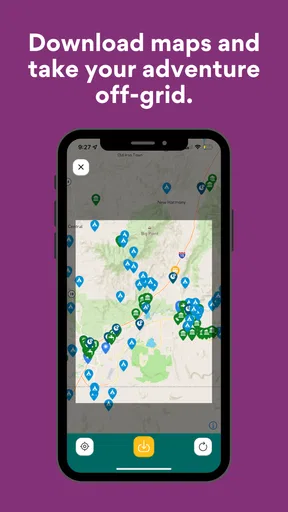
Sēkr is most useful with an active internet connection because maps, listings, reviews, directions, and community updates may need to load from the service. Travelers heading into remote areas should prepare before losing reception by saving important details, downloading maps through any available offline options, and keeping backup navigation tools. Offline availability and feature limitations can vary by app version, region, and membership plan.
Is Sēkr free to download, and are there paid features?
Sēkr may be downloaded without an upfront charge, but some features, content, or enhanced travel tools can require an in-app purchase or subscription. The exact pricing and benefits may change over time, so it is important to review the current App Store or Google Play listing before subscribing. Check the renewal terms carefully, especially if you only need premium access for a single trip.
Are the campsites and overnight locations in Sēkr guaranteed to be safe and legal?
No travel app can guarantee that every listed location is safe, available, or legally suitable for overnight camping. Conditions can change because of closures, seasonal restrictions, private-property rules, weather, local enforcement, or inaccurate and outdated user reports. Treat Sēkr as a planning and discovery resource rather than a guarantee. Confirm permissions, obey posted signs, protect the environment, and use good judgment at every stop.
